
Kenya Makes the Business Case for Institutional Clean Cooking
As more and more families adopt clean stoves and fuels in their homes, a complementary pathway to increased energy access is emerging: public institutions. In a new publication, supported by the country’s Clean Cooking Delivery Unit, the Government of Kenya spells out how institutional clean cooking is not only a social good, but also a significant investment opportunity.
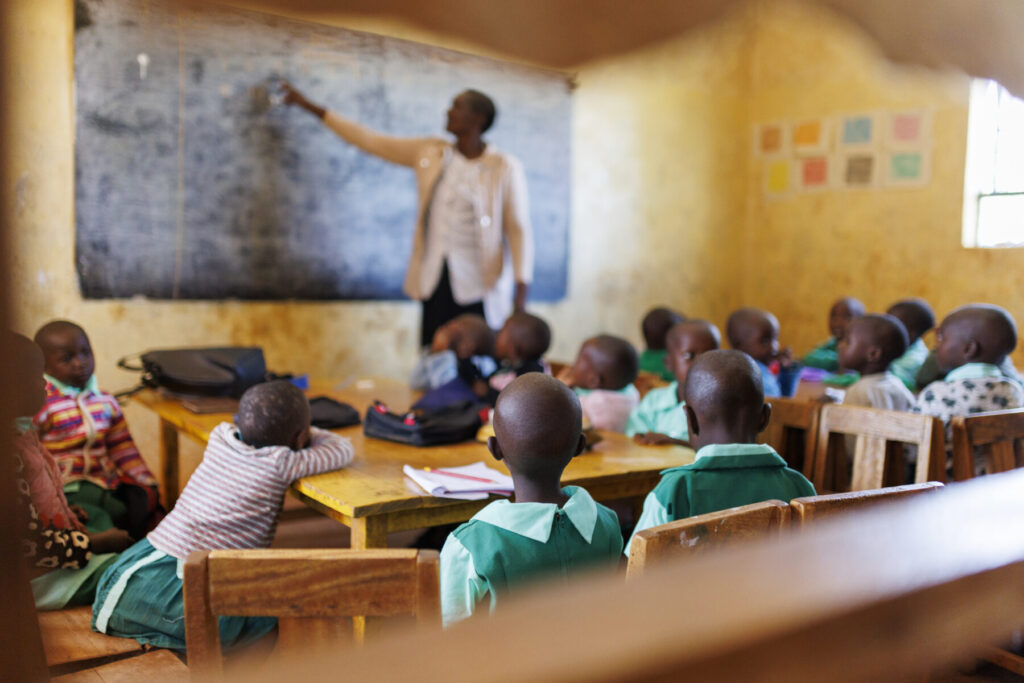
Across Kenya, schools, hospitals, and prisons are responsible for feeding millions of people every day; nearly all of them rely on smoky wood fires or inefficient stoves to do so. Schools alone consume approximately 1 million tonnes of firewood every year, at a cost of about KES 6 billion—a figure that’s only set to grow as the government expands its National School Meals Program to reach 10 million learners by 2030.
These are vital services. Their impact would be even greater if the institutions delivering them transitioned to clean cooking. Benefits would include not only cleaner air and reduced pressure on local forests, but also less money spent on energy for cooking—making more resources available for education, healthcare, and other social services.
 © Bettering Human Lives Foundation
To quantify this opportunity, Kenya’s Government recently launched the Clean Cooking Sector Investment Pack. The publication was developed by the Office of the Special Envoy for Climate Change through its Clean Cooking Delivery Unit—which undertook extensive analysis and engagement with partners across the sector—and was supported by the Clean Cooking Alliance and the Kenya Investment Authority.
According to the Sector Investment Pack, the upfront cost of transitioning Kenya’s institutions to clean cooking is substantial but manageable: KES 77 billion (US$589 million). Moreover, there are particular aspects of the institutional cooking sector that make it well positioned for investment:
- Public institutions cook in large volumes every day. Their energy demand is visible, consistent, and predictable. Aggregating the clean cooking opportunity across Kenya’s 100,000+ institutions creates a large and concentrated portfolio.
- The country’s dynamic clean cooking ecosystem supports a wide range of technologies and fuels, including electricity, LPG, biogas, and efficient biomass, making it possible to tailor solutions to institutional needs. Companies like IGNIS Innovations and Feion Green Ventures have already deployed steam and electric cooking systems that cut fuel costs by 60-70% while improving kitchen conditions. BURN has demonstrated 7–8-month payback periods with its efficient biomass stoves that significantly reduce fuel consumption.
- Thanks to institutions’ variety of commercial models, a range of financing options can be layered in order to rapidly deploy clean cooking solutions. For example, institutions can forego upfront capital costs by paying a periodic fee to a clean cooking provider, or opt to lease technologies using money saved from reduced fuel consumption. With greater regulatory clarity, carbon finance could play an even greater role in financing these transitions.
- The government has ambitious plans to scale up clean cooking, with early momentum in schools thanks to successful collaborations between NACONEK and the Ministry of Education. Underpinning all this is a highly collaborative approach to policymaking facilitated by the Clean Cooking Delivery Unit.
In sum, institutional clean cooking brings together key investment characteristics: defined market demand, proven technology, supportive policy, and genuine social impact. Looking ahead, Kenya’s Clean Cooking Delivery Unit is actively using the Sector Investment Pack to facilitate partners discussions and build a pipeline of clean cooking investment opportunities—paving the way for better energy access for millions of people.
To read more about the Clean Cooking Sector Investment Opportunity in Kenya, click here.