
Strengthening Food Systems and Clean Cooking: Lessons from the African Biodigester Component
Across the world, smallholder farms generate large amounts of agricultural and livestock waste that, when unmanaged, releases harmful greenhouse gases. Biodigesters offer a sustainable solution by converting this waste into biogas and bio-slurry, a nutrient-rich organic fertilizer. By providing farmers with clean, reliable energy and reducing their reliance on costly chemical fertilizers, this solution improves soil fertility over the long term—driving higher crop yields and boosting farmers’ resilience to climate change.
Through the African Biodigester Component (ABC), a five-year initiative coordinated by the Netherlands Enterprise Agency (RVO), farmers across sub-Saharan Africa use biodigesters to regenerate soils, boost crop yields, and produce biogas for clean cooking and other productive uses. In 2024, 58 biodigester enterprises were engaged in the program. ABC supports the growth and long-term sustainability of a commercial biodigester sector in Burkina Faso, Kenya, Mali, Niger, and Uganda by strengthening enterprises, enabling market expansion through results-based financing, supporting the development of the biofertilizer value chain, raising consumer awareness, and improving the regulatory environment.
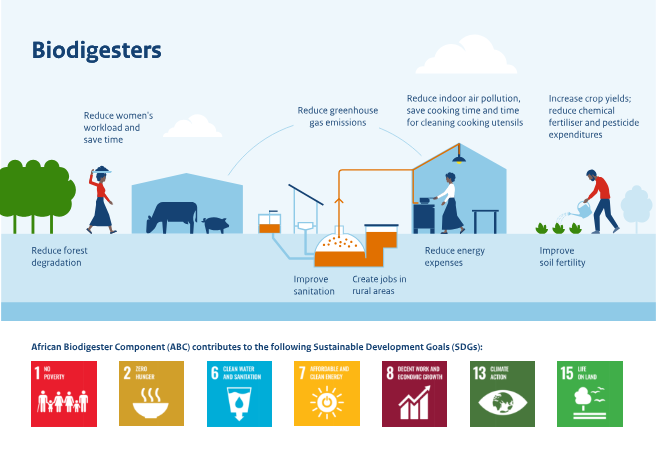 Source: Netherlands Enterprise Agency (RVO)
A Tool for Enhanced Food Security
A recent study by RVO highlights the strong potential of bio-slurry, a key output of biodigesters, to strengthen food security and build more resilient farming systems. The research found that bio-slurry significantly improves soil fertility, boosts crop yields, and reduces farmers’ reliance on costly and environmentally damaging chemical fertilizers. Farmers also reported greater resilience to pests, crop diseases, and climate stress. In Kenya, nearly 100% of biodigester-owning farmers saw improvements in crop quality after applying bio-slurry.
Building on this evidence, RVO has proposed integrating food security impacts into the voluntary Gold Standard framework for biodigester projects. This would allow future biodigester carbon projects to credibly demonstrate their contributions to improved yields and food security and potentially access higher-value carbon credits. This is especially important in food-insecure regions, where the ability to generate premium credits could unlock greater investment and accelerate action to strengthen local food systems.
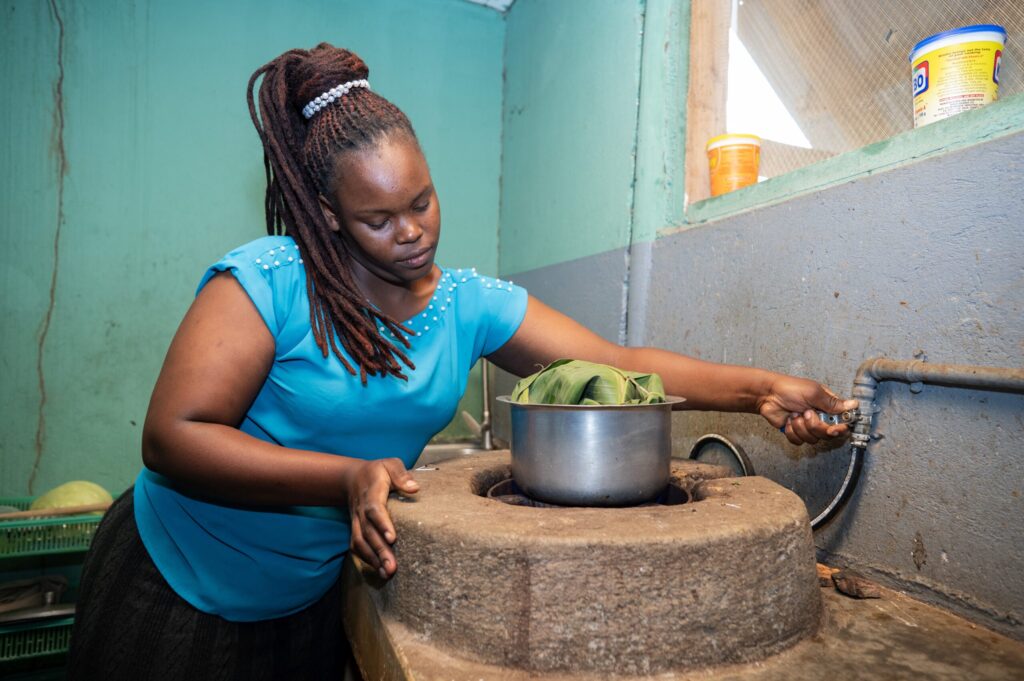 Photo: SNV Uganda
Lessons Learned
A central lesson from ABC is that farmer adoption hinges on affordability and clear economic value from both biogas and bio-slurry. Farmers commit to biodigesters when they understand that the technology is not only a source of biogas but also a high-value, fertilizer-producing system that boosts crop productivity, enhances soil health, lowers input costs, and offers a tangible return on investment.
Despite awareness and demonstrated benefits, many farmers struggle with the high upfront costs of biodigesters. In response, ABC has formed partnerships with microfinance institutions and banks, particularly in Uganda and Kenya, to create low-cost credit lines tailored to farmers, including grace periods that reflect the time needed for digesters to become fully operational.
Success Story
One standout example from the program comes from Dr. David Mugabi, a veterinary doctor turned farmer in Masaka, Uganda. After struggling with the high cost of firewood to cook for his 17 farm workers, he installed a biodigester in 2023 with support from ABC and Biogas Solutions Uganda. Biogas quickly replaced firewood, but the real transformation came from the bio-slurry, which revitalized his banana, coffee, and pasture fields, and boosted milk production. He produces over 1,200 litres of bio-slurry per day and is able to sell the surplus to neighbouring farmers, generating enough income to pay his staff and expand operations. “If you look at the money saved from not buying vegetables, not buying agrochemicals, not buying firewood, and health wise, we are already breaking even!” he says.
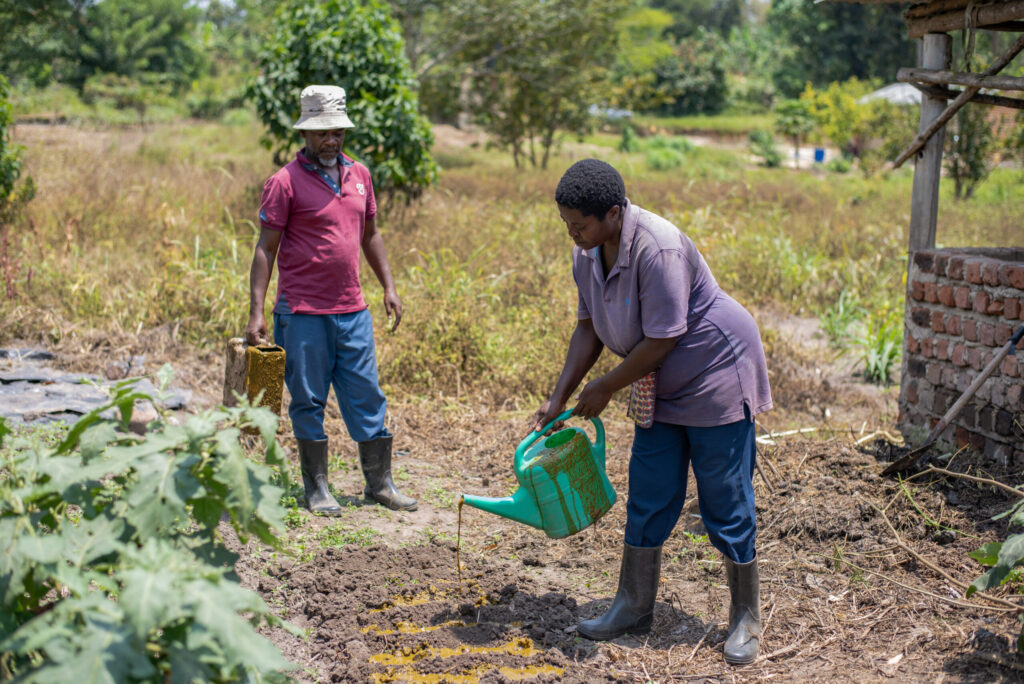 Photo: SNV Uganda
References:
1 Buysman et al., Bio-slurry’s Contribution to Food Security: Integrating Biodigester Impacts into the Voluntary Gold Standard’s SDG 2 Framework, 2025.