
What we learned about cooking mindsets and electric pressure cookers in Nairobi
On any given evening in Nairobi, making dinner might look something like this: ugali simmering over a gas (LPG) stove, water boiling in an electric kettle, and beans or meat cooking in an increasingly popular appliance: the electric pressure cooker (EPC). Among many urban families, the EPC has become a kitchen fixture. New research from the User Insights Lab (UIL) confirms that pattern at scale and reveals where the opportunities and friction points lie.
In September 2025, the UIL published findings from 21 in-home ethnographic visits across Nairobi on our People’s Insights Portal. That study gave us the “why” behind how households cook and where the EPC fits into their lives. It surfaced six cooking mindsets; mapped the tensions between an appliance’s convenience and a user’s level of control over the cooking process; and identified the barriers holding back confident EPC users from using their appliance even more.
The question that followed was straightforward: to what extent did the findings from the initial study apply across a larger sample of consumers?
To find out, we ran a quantitative validation study in late 2025 with 303 EPC owners across Nairobi, Kiambu, Machakos, and Kajiado. In-person surveys were conducted in Swahili for an average of 90 minutes each. The goals were to confirm the patterns from the earlier ethnographic study; quantify EPC usage; and rank the barriers to greater EPC usage by how much they actually matter to consumers.
What did we discover?
The EPC has a settled role in meal preparation
Ninety-eight percent of EPC owners in our sample also cook on LPG. The EPC is typically used four days a week, while LPG is used every day. On average, the EPC accounted for roughly one quarter of all weekly cooking events (self-reported stacking index: 0.26. The stacking index is the proportion of total cooking events cooked on the target cooking technology, as reported by participants.) For comparison, CCA’s forthcoming study on comparative fuel stacking found that single-burner devices typically reach around 0.50.
The EPC earns its place for specific jobs: labor-intensive dishes requiring extensive boiling, particularly meat (60% of all EPC-cooked meals), githeri (54%), and beans (54%).
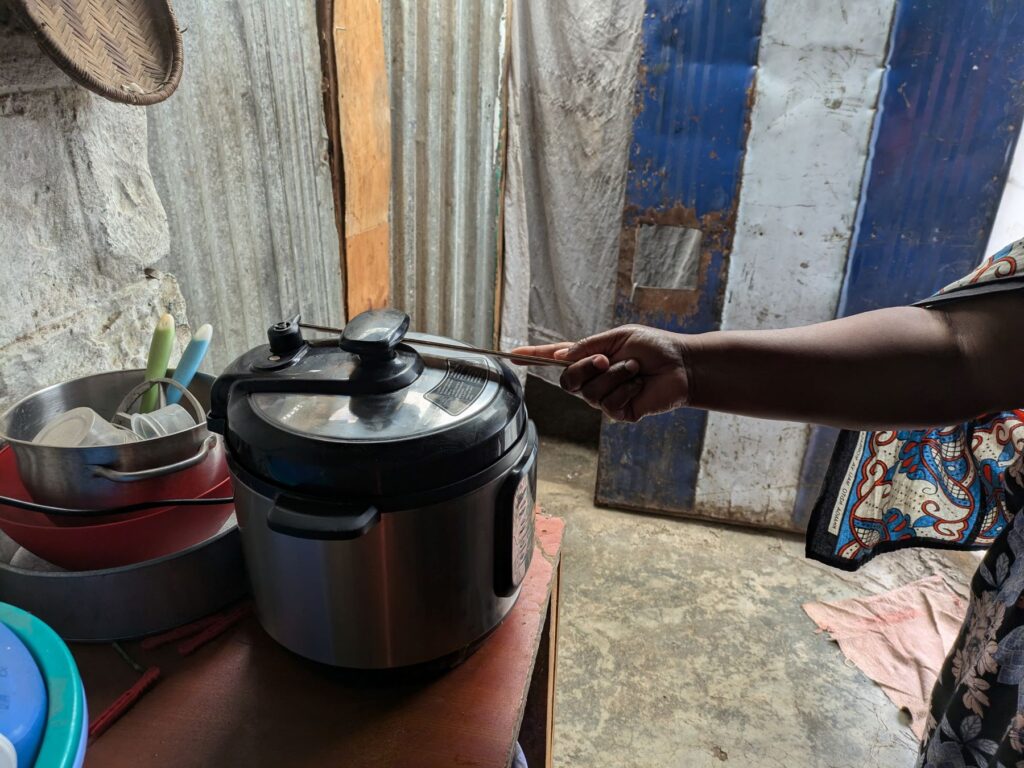
The EPC is primarily a specialist appliance, although 44% of owners also use it in non-pressurized mode, pointing to a willingness to experiment beyond its primary function. Today, any product or communications framing that positions the EPC as an LPG replacement is working against how people cook. However, as confidence and familiarity grow, that share could increase.
Cost and time savings came through strongly as the EPC’s primary benefits. As one participant put it, “It’s easy to use, the food gets ready faster, it doesn’t consume a lot of electricity, it’s fun and enjoyable because you don’t need to supervise.”
The six cooking mindsets held up in the quantitative study
The six cooking mindsets identified in the initial ethnographic study (Nurturing, Experimental, Tradition-Respecting, Time-Conscious, Budget-Minded, and Convenience-Seeking) were validated across the full sample. Seventy percent of respondents were classified as Nurturing, 61% as Experimental. Most people identified with more than one mindset: the average was 2.4 mindsets per person, confirming the ethnographic finding that cooking motivation is not fixed but rather shifts across the week.
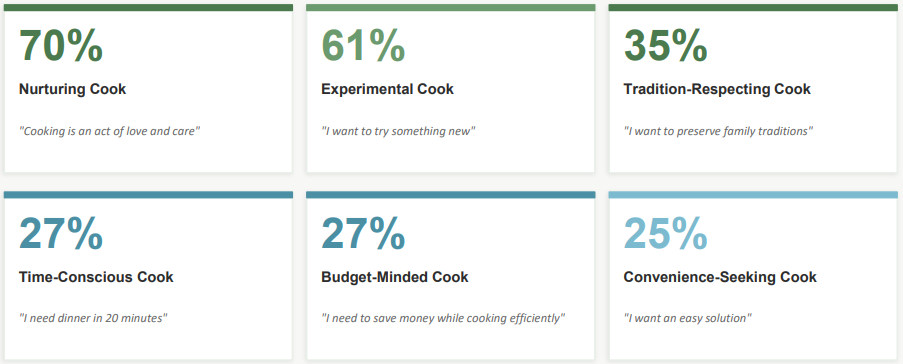
One result surprised us: how often people used their EPC was almost perfectly consistent across all six mindsets (stacking index range: 0.22 to 0.29). A Nurturing cook and a Time-Conscious cook might reach for the EPC on the same number of days for the same dishes, but the Nurturing cook is more likely to worry about whether the food will come out right. Usage is governed by what is being cooked, the time available, and the rhythm of the week. For manufacturers and clean cooking program designers, this means the most effective trigger of greater EPC use is associating the appliance with specific dishes and occasions.
The two barriers that matter
One aspect of the study was a MaxDiff analysis, a method for ranking consumer preferences by forcing choice of the most and least liked items in a list. In the exercise, participants ranked 16 statements by relative importance. The top three were:
- Safety fear (“I fear the pressure may be unsafe if the lid is not closed properly.”)
- Inability to check doneness (“I worry about overcooking or undercooking: I can’t check inside.”)
- Fear of water damage
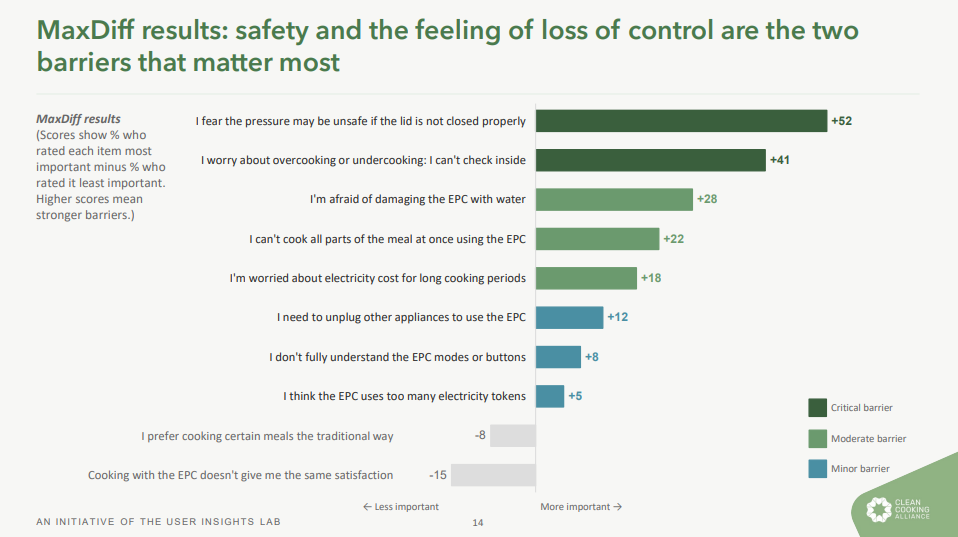
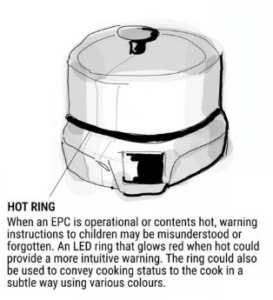
The results provide support for some of the “napkin sketches” that the UIL developed in the first phase of the research, conceptualizing how future EPC designs might alleviate users’ concerns. (The napkin sketch shown at left seeks to address one of the safety concerns that participants reported; additional sketches can be viewed in the People Insights Portal.)
How should we interpret these results?
The safety fear is a perception problem rather than a product flaw. Participants explicitly referenced how manual pressure cookers can explode, and that fear is being transferred onto the EPC, even though the EPC works on a fundamentally different and far safer mechanism. This is the highest-leverage barrier in the data and is addressable through communications rather than product change. As one participant said, “A lot of people in the community think all pressure cookers are dangerous because we’ve all seen pictures of manual cooker explosions, and that puts them off.”
The anxiety about food doneness is more structural. The EPC’s closed-lid cooking style removes the visual and sensory cues that experienced cooks rely on. It creates particular difficulty for Nurturing and Experimental cooks — the two most prevalent mindsets — for whom the outcome of a meal carries real personal weight. One participant described it plainly: “It makes me use guesswork when cooking, approximating the time and setting on the device.”
The mainstream is not using the EPC to its full potential
Early adopters in the study sample (those who have owned their EPC for more than 30 months) show a stacking index of 0.36 and skew heavily towards Nurturing and Experimental cmindsets. The early majority (under 30 months of ownership) sits at 0.29 and tend to be more Time-Conscious, meaning that the group that arguably has the most to gain from an appliance built around speed has yet to fully integrated it into their routine. Reaching them requires a different focus for onboarding and messaging, not simply showing or describing a better product. Onboarding that covers the specific dishes the EPC can cook, and also sets expectations around how it works alongside other fuels, such as LPG, is more likely to convert this group than messaging built for enthusiasts.
The advocacy signal
Eighty-nine percent of respondents had already recommended their EPC to friends or family, without any formal incentive program in place. Speed and time-savings were the primary reasons they gave. This is a meaningful activation opportunity: word of mouth is already working, and it is working on the EPC’s strongest attribute.
What users want next
Current EPC users are a valuable source of product direction. When asked what single change they would most like to see, 14% wanted an additional pot to use with the EPC, 10% would increase the size of the cooking pot, 7% wanted a transparent lid, and 6% wanted lower electricity use. These preferences map directly onto the two dominant barriers: the desire for a transparent lid speaks to the doneness anxiety, while the additional pot points to a wish to expand the EPC’s role in the weekly cooking routine.
An evolving market
Of the 303 people surveyed, 50% had owned their EPC for less than a year. The clean cooking landscape in Nairobi is changing quickly, and the majority of current owners are still in the early stages of integrating the appliance into their routines. The findings from this study, along with the ethnographic work that preceded it, give manufacturers, distributors, donors, and policymakers a clearer picture of where to focus clean cooking efforts.
A third study: testing interface prototypes in the home
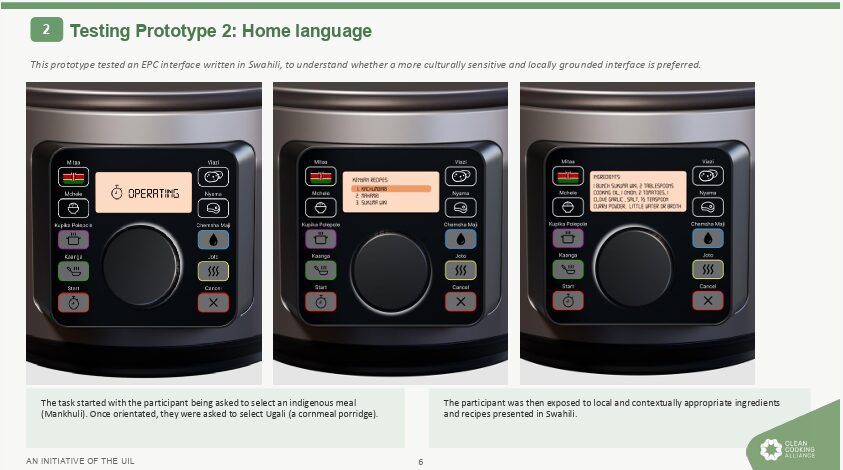
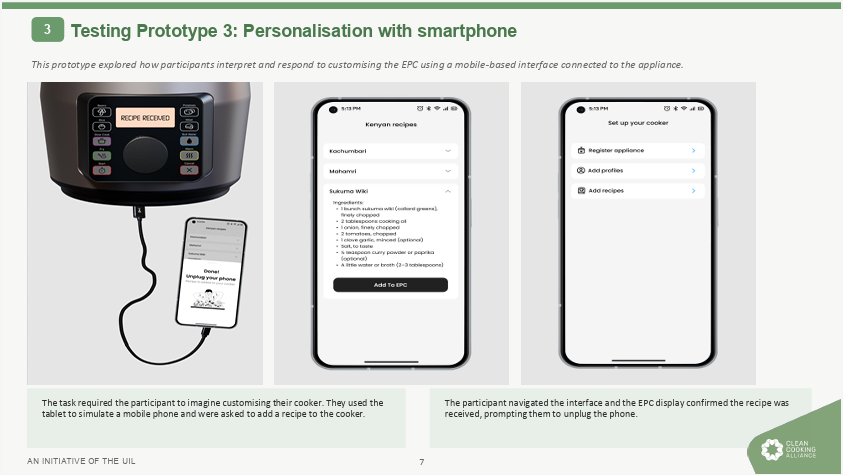
Alongside this quantitative work, the UIL has completed a third study in this research program: a user interface prototype study in which five concepts were tested directly with EPC owners in their homes, across 10 moderated sessions. The five prototypes covered electricity supply warnings, home language (Swahili), personalization, simplified interfaces, and cost-saving messages. Interfaces prioritizing personalization and the electricity supply warning led across every measure. The method itself — bringing interactive digital prototypes, displayed on tablets, into people’s homes rather than a lab — produced findings we think the sector will find genuinely useful.
To read the full study in detail, click here.