
Nepal’s New Carbon Trading Regulation: A Breakthrough for Scaling Up Clean Cooking and Community-Level Energy Transitions
Nepal has entered a new phase of climate governance with the endorsement of the Carbon Trade Regulation, 2082, which—for the first time—provides a comprehensive and operational legal basis for developing, registering, and trading carbon credits under both the Paris Agreement (Article 6) and the Voluntary Carbon Market (VCM).
This regulatory milestone carries particular significance for the clean cooking sector, which remains one of Nepal’s most critical development, environmental, and public health priorities. According to the 2021 National Census, 51% of Nepali households still rely on firewood, with even higher dependence among low-income and rural municipalities. This heavy reliance on solid biomass fuels is directly linked to forest degradation, indoor air pollution, growing heat stress, increased drudgery for women, and high carbon emissions.
Nepal’s National Determined Contribution 3.0 outlines ambitious commitments to reduce firewood consumption and accelerate the adoption of electric cooking, improved biomass technologies, and other clean solutions. The new Carbon Trading Regulation arrives at a decisive moment, strengthening Nepal’s ability to finance this transition through carbon markets.
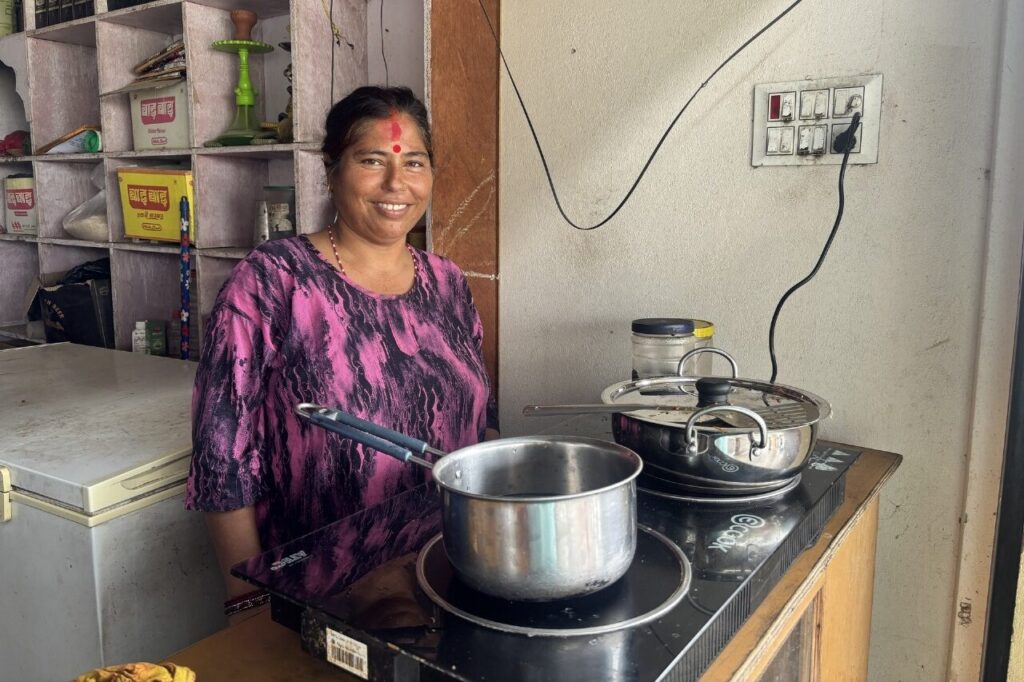 Photo: Sustainable Prosperity Initiative
Corresponding Adjustment: A Critical Provision for Market Integrity
The regulation clearly states that for any international transfer of carbon credits under Article 6.2, the designated national authority will execute the corresponding adjustment. This single provision provides the credibility and assurance that international buyers require to engage with Nepal on long-term, high-integrity carbon transactions.
A Transformative Opportunity for Clean Cooking Carbon Finance
Globally, clean cooking is regarded as one of the most impactful and investment-ready climate sectors due to its immediate and measurable emission reductions and strong co-benefits. Technologies such as induction stoves, electric pressure cookers, and improved biomass stoves deliver:
- Immediate reductions in indoor air pollution
- Lower exposure to household smoke, especially among women and children
- Relief from extreme kitchen heat (heat stress), which is especially critical in the Tarai region of Nepal
- Reduced dependence on biomass and imported LPG
- Lower household energy expenditures
- Faster, safer, and more convenient cooking
- Reduced pressure on forests
- Direct contributions to the Sustainable Development Goals, including SDG3 (good health and wellbeing), SDG5 (gender equality), SDG7 (affordable and clean energy), SDG13 (climate action), and SDG15 (life on land).
The new regulation explicitly includes clean cooking under “Energy Efficiency and Clean Energy Conversion,” providing legal clarity for investors, implementing partners, cooperatives, and local governments.
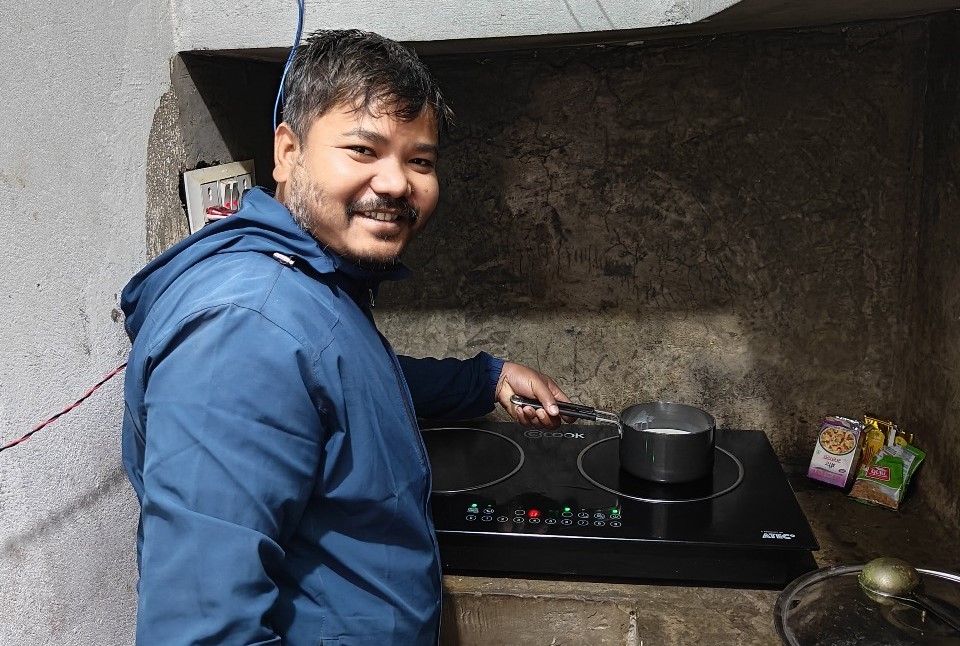 Photo: Sustainable Prosperity Initiative
Strong Governance Features to Ensure Fairness, Transparency, and Market Integrity
The regulation incorporates globally aligned safeguards that directly address concerns about carbon market integrity, including:
- Mandatory 5% Contribution to Nepal’s NDC: Five percent of all verified carbon credits are automatically allocated to Nepal’s NDC mitigation contribution, ensuring national retention of climate outcomes.
- Mandatory 10% Government Revenue Share: All private-sector projects—including clean cooking—must allocate 10% of gross carbon revenue to the Government of Nepal. This promotes public benefit without compromising project viability.
- Sales Fee of NPR 100 (USD 0.7) per Ton of Carbon: A transparent, standardized fee applies to every ton sold (after NDC deduction).
- Community-Centered Benefit Sharing: Every project must include a benefit-sharing plan ensuring financial and non-financial benefits reach participating households in an equitable way.
- Robust monitoring, reporting, and verification (MRV): The regulation mandates Paris-aligned MRV, third-party verification, and strict double-counting safeguards.
- Corresponding Adjustment for Article 6: The corresponding adjustment is implemented by the designated national authority, enabling Nepal to access premium carbon markets.
- Time-Bound Approvals: The regulation significantly improves procedural efficiency by removing bureaucratic uncertainty and paving the way for accelerated private investment. The regulation specifies:
- 15 days for concept note recommendation
- 15 days for concept note approval
- 15 days for project document approval
- 7 days for issuance of final approval
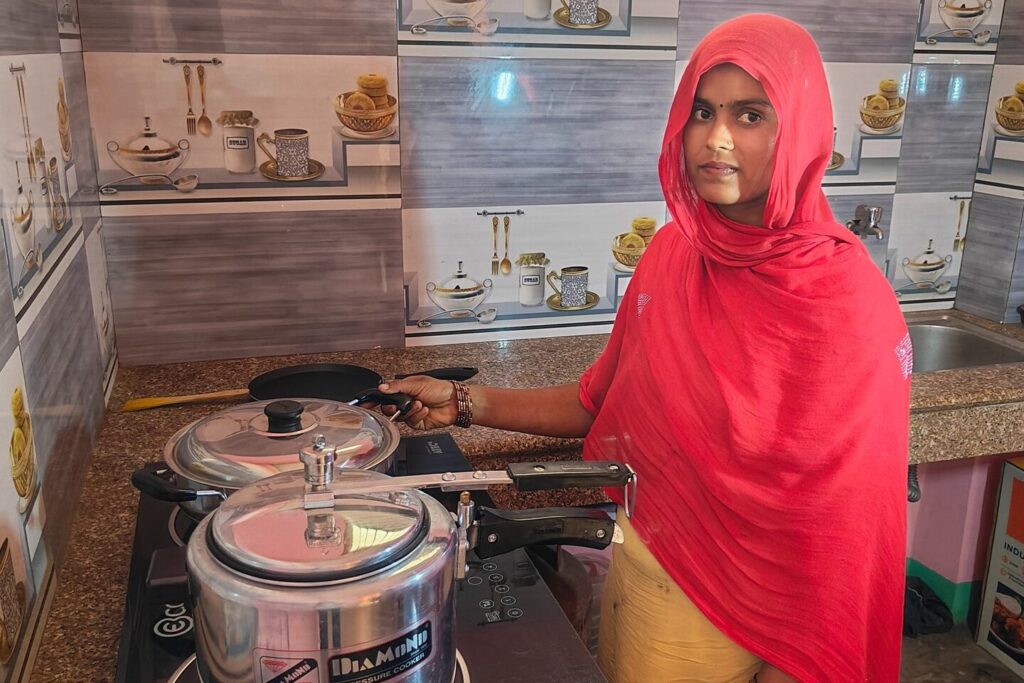 Photo: Sustainable Prosperity Initiative
Key Issues That Must Be Addressed to Attract Long-Term International Investment
While the new Regulation creates a strong foundation, several systemic challenges remain:
- Predictable Long-Term Policy Environment: Investors require consistent implementation without frequent regulatory shifts.
- MRV Capacity Limitations: High-quality data systems are essential for premium markets; technical training remains necessary.
- Clarity on Taxes, Accounting, and Foreign Exchange Regulations: International buyers need predictable rules for taxation, revenue repatriation, and foreign investment processes
- High Upfront Costs for Large-Scale Clean Cooking Programs: Carbon finance flows only after verification, so concessional finance and blended capital are essential.
- Increasing International Competition: Robust MRV and transparent systems are crucial for Nepal to remain competitive.
- Local Government Coordination and Awareness: Municipalities need orientation on carbon processes to support project rollout.
A Defining Moment for Nepal’s Clean Cooking Transition
Nepal’s new Carbon Trade Regulation sets a clear, internationally aligned, and community-centered framework for accelerating clean cooking adoption. For households still relying on firewood, for women bearing disproportionate health burdens, and for investors seeking credible climate opportunities, this marks a turning point. Nepal now has the opportunity to position clean cooking not merely as a development program, but as a nationally significant, investment-ready climate solution capable of delivering health, gender, environmental, and economic benefits at scale.
Acknowledgements
CCA would like to acknowledge our partners from the Sustainable Prosperity Initiative (SPI Nepal), especially Sarita Karki, Managing Director, and Purushottam Ghimire, Senior Policy Advisor, for their efforts to support this outcome and for their collaboration in accelerating clean cooking access in Nepal.
| Step-by-Step Procedure for Clean Cooking Project Developers | ||
| 1. Prepare Concept Paper (Schedule-2): Includes project outline, expected emission reductions, benefit-sharing mechanism, and buyer information. | ||
| 2. Recommendation within 15 Days: From concerned ministry or RED Implementation Center. | ||
| 3. Submit to Ministry for Review: Technical review with possibility of requested revisions. | ||
| 4. Letter of Agreement to Prepare Project Document | ||
| 5. Prepare Project Document (Schedule-3): Includes methodology, MRV plan, risk analysis, benefit-sharing plan, and stakeholder engagement. | ||
| 6. Approval within 15 Days | ||
7. Pay Approval Fee:
|
||
| 8. Receive Approval Letter within 7 Days | ||
| 9. Implement Project, Conduct MRV, Sell Credits: After NDC deduction and NPR 100/ton fee, revenue is allocated per the approved benefit-sharing plan. |