A Decade of Progress on Clean Cooking in Nepal
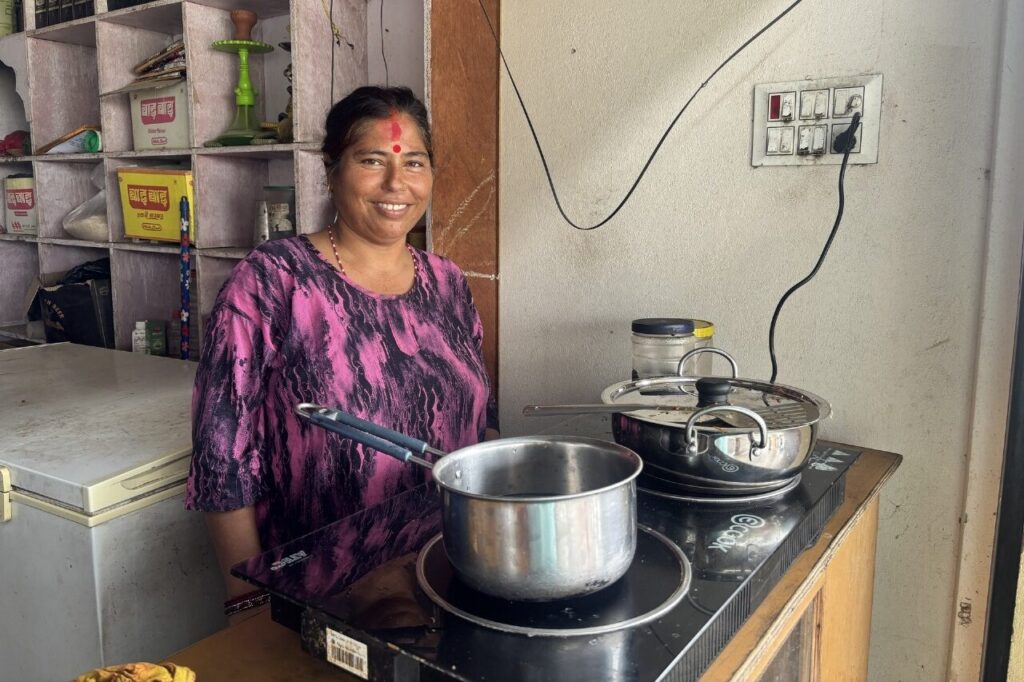
Over the past 10 years, Nepal has charted a promising path to making clean cooking a reality for its population. Through sustained collaboration between the Clean Cooking Alliance (CCA), the Government of Nepal, and international and local partners, the country has made significant progress toward its goal of universal access to clean cooking by 2030, with 25% of households cooking with electricity.
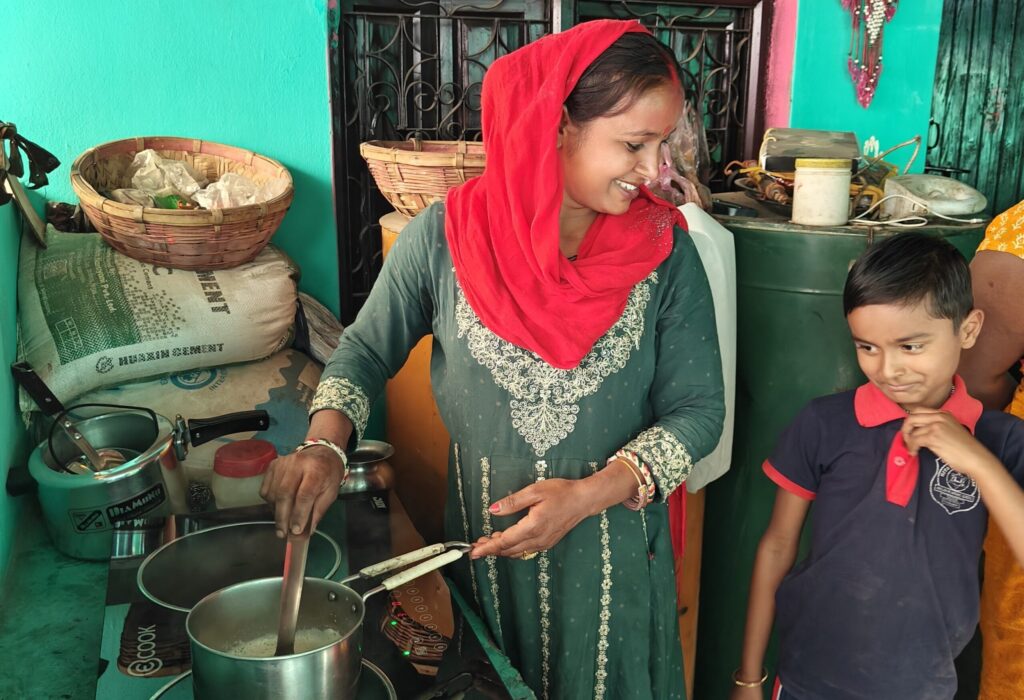
CCA is the first to introduce electric cooking in the peri-urban communities of Kavre District (2017-2019)
In 2019, the Clean Cooking Alliance successfully completed the two-year Demonstration Project “Maximizing the Health Benefits of Clean Household Energy in Peri-Urban Nepal,” designed to support the Government of Nepal’s objective of establishing smoke-free kitchen communities and improving health outcomes through clean cooking. This project was unique for its wide range of activities, including introducing electric induction cooking; conducting behavioral and educational activities such as behavior change awareness campaigns, induction cookstove market promotions, and counselling to household members by female community health volunteers; and piloting conditional cash transfers to encourage disuse of traditional stoves and fuels.
Data collection covered numerous aspects, including surveys of kitchen electrical wiring systems; biogas and feedstock assessment surveys; continuous stove use monitoring in all households, which allowed for pre- and post-intervention comparisons; repeated 24-hour measurement of personal PM2.5 exposure in 148 households; continuous outdoor air pollution monitoring of PM2.5 in both the municipalities; blood pressure screening of home cooks, measured four times across 772 households, twice across 330 households, and once across 761 households; fuel and energy source consumption surveys (energy audits) in 105 households; and electricity usage monitoring for 3-4 months in 39 homes.
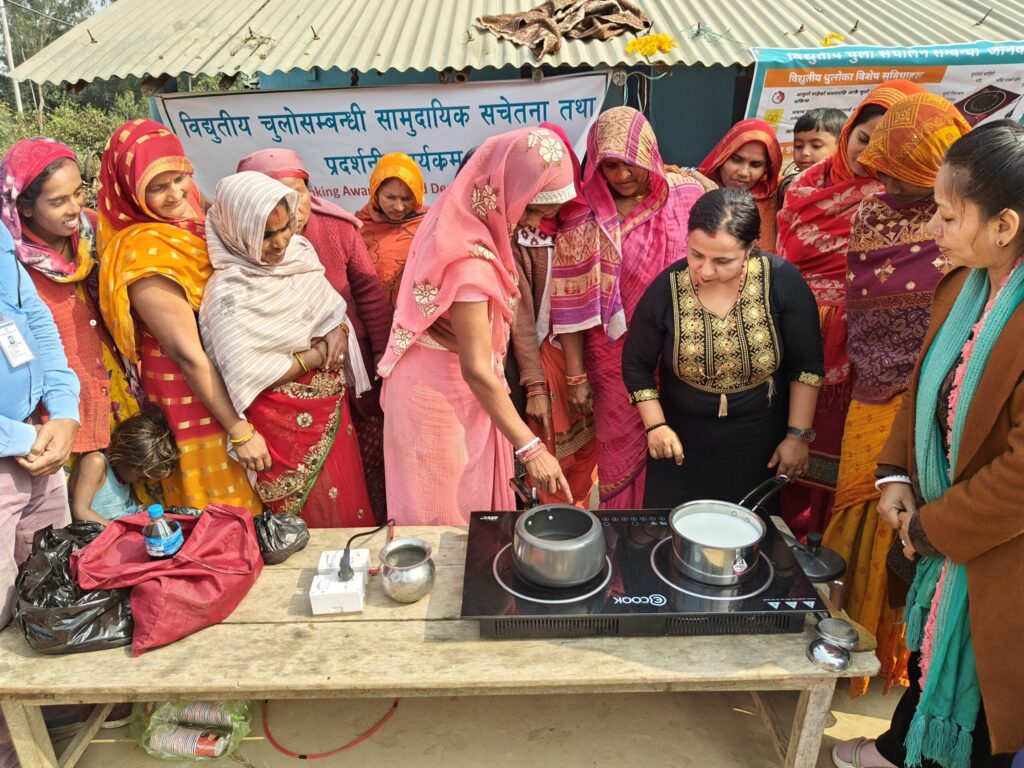
CCA supported the International Center for Integrated Mountain Development in introducing induction cooking in the mountain village of Dhundinitar, Nuwakot
CCA introduced a market-based approach as well as demand and behavior change communications, model kitchen demonstrations, live demonstrations in tea shops, and health camp activities to introduce electric cooking to the beneficiaries of the “Resilient Mountain Village: A Pilot Demonstration Project on Earthquake Reconstruction and Rehabilitation.” After three months of continuous effort, 42 out of 92 households purchased induction cooktops together with a pair of utensils. The community is broadly convinced of the suitability and ease of this solution for their small, two-room, post-disaster reconstruction houses.
Settings standards and testing stoves
CCA’s work in Nepal began with essential groundwork: establishing standards and testing infrastructure by upgrading Renewable Energy Test Stations to ISO standard biomass stove testing labs. In 2017, CCA supported Nepal’s Bureau of Standards and Metrology in developing national standards for electric induction cookers and hotplates and upgraded equipment at testing labs to international specifications. That commitment has continued. Just last year, Nepal’s standards body approved new criteria for electric pressure cookers and infrared hobs, expanding customer’s clean cooking options.
Standards work matters because it ensures that appliances reaching consumers meet basic safety and performance benchmarks, reducing consumer risk while building market confidence in new technologies.
Building the evidence base
Parallel to standards development, CCA invested heavily in data infrastructure. Beginning in 2021, the organization worked with the World Resources Institute (WRI), KTH Royal Institute of Technology, and the Government of Nepal to create the Clean Cooking Explorer—a geospatial platform mapping where and how clean cooking adoption could best succeed. That tool has since merged with WRI’s broader Energy Access Explorer, incorporating sophisticated modeling capabilities that let planners evaluate cost-benefit scenarios across different cooking technologies for different regions.
The Explorer helped generate important and practical insights. A 2024 study published in The Lancet Journal of Planetary Health found that Nepal’s clean cooking transition could prevent approximately 9,563 deaths annually. The research also showed that reallocating existing subsidies from imported liquefied petroleum gas to electric cooking could increase adoption rates from 46 percent to 64 percent without requiring new public spending—shifting resources toward Nepal’s own renewable hydropower rather than foreign fuel imports.
Demonstrating impact
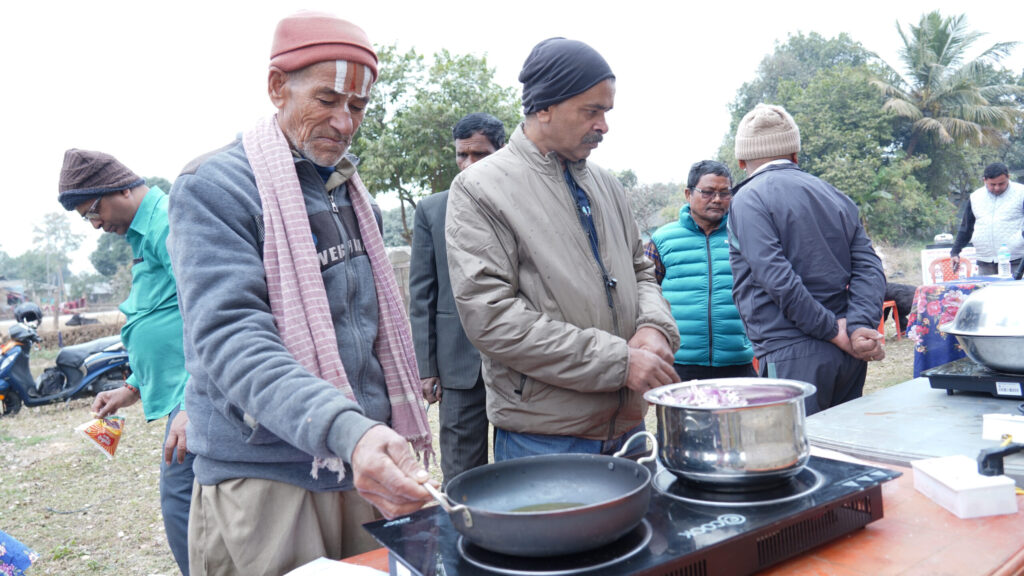
To better understand consumer preferences in Nepal, CCA undertook a multi-year study exploring effective strategies for shifting peri-urban households to electric and biogas cooking. The three key ingredients to a successful energy shift came down to: affordable appliances, accessible supply, and adequate information. The project found that, after buying an electric stove, families reduced their use of biomass and LPG, which reduced their household energy costs. CCA then examined the energy consumption of electric cookstoves and found that most homes require basic electrical improvements. This highlighted the critical need for community-scale infrastructure, which the government is now developing.
Planning for policy
CCA support for government planning has been a constant feature of its work in Nepal. In 2022, this resulted in the launch of a Country Action Plan that lays out steps for achieving Nepal’s goals for energy access and their contributions toward energy independence and climate action.
Beyond household adoption, CCA’s engagement has helped institutionalize clean cooking within Nepal’s governance structures. For example, in tandem with a CCA-led electric cooking project in Madesh Province (funded by the Government of Norway and the Asian Development Bank’s South Asia Sub-Regional Economic Cooperation Power Transmission and Distribution System Strengthening Project), one municipality opted to subsidize cooking utensils suited to induction stoves. Meanwhile, the Nepal Electricity Authority upgraded distribution infrastructure in project areas to accommodate increased electricity demand.
The project’s results speak volumes: 99% of the target audience adopted electric cookstoves, with 98 of households reporting reduced indoor smoke and heat stress. Families also spent far less time collecting firewood (from an average of 9.5 hours weekly to 2.7 hours) and cooking (from 1.91 hours daily to 0.89 hours).
Looking Forward
A decade of CCA work in Nepal demonstrates that clean cooking transitions require sustained engagement across multiple levels: technical standards that protect consumers, data infrastructure that guides policy, field projects that demonstrate viability, and institutional ownership ensuring continuity. Thanks to this strong foundation and the government’s commitment, Nepal is well positioned to continue this energy transition at greater scale.